How to Write a Chorus in 6 Steps (With an Example)
To write a chorus, say your song in one sentence, put the title in the first or last line, lift the melody, repeat on purpose, and write three versions.
The Veinote Team · 21 November 2026
To write a chorus, say what your song is about in one sentence, put the title in the first or last line, lift the melody above the verse, repeat the main line on purpose, and write three versions before you choose. The chorus is the part a stranger remembers after one listen. This guide takes those steps one at a time and builds a chorus from scratch as it goes.
Veinote is a songwriting app for people who write their own songs. Everything below also works with a notebook and a phone.
The short version: one idea, few words, the title where it cannot be missed, a melody that rises, and the same line more than once.
What a chorus does
A chorus has three jobs. It says the main idea of the song, it gives the listener something to sing back, and it returns, so the song has a home to come back to.
That is why it differs from a verse:
| Verse | Chorus | |
|---|---|---|
| Job | Tells the story | Says what the story means |
| Words | Change every time | Stay the same |
| Detail | Specific: who, where, what happened | Simple and direct |
| Melody | Lower, more like speech | Higher, longer notes |
| Listener | Follows along | Sings along |
Key takeaway: verses explain, the chorus feels. If a line needs explaining, it belongs in a verse.
Step 1: Say your song in one sentence
Before you write a line, say out loud what the song is about, as you would to a friend. One plain sentence, no rhyme.
Our example for this guide: “I stayed too long in something that was over.”
That sentence is not the chorus yet, but the chorus is inside it. Look for the shortest part that still carries the feeling. Here it is three words: stayed too long.
If you cannot say the song in one sentence, the chorus will not come. Go back to the idea first. Our guide on how to write a song starts there.
Key takeaway: find the sentence, then find the few words in it that carry the weight.
Step 2: Put the title in the first or last line
The title of the song should be in the chorus, and in a place the ear cannot miss: the first line, the last line, or both. Those are the lines people remember.
In our example the title is “Stayed Too Long”, so the chorus opens and closes on it.
A quick test: after hearing the chorus once, could a stranger guess what the song is called? If not, move the title.
Key takeaway: title first, title last, or both. Never hidden in the middle.
Step 3: Use fewer, simpler words
A chorus has less room than you think. Aim for two to four short lines. Choose words a ten-year-old knows, and let one concrete picture do the work that three abstract lines cannot.
Here is the example so far:
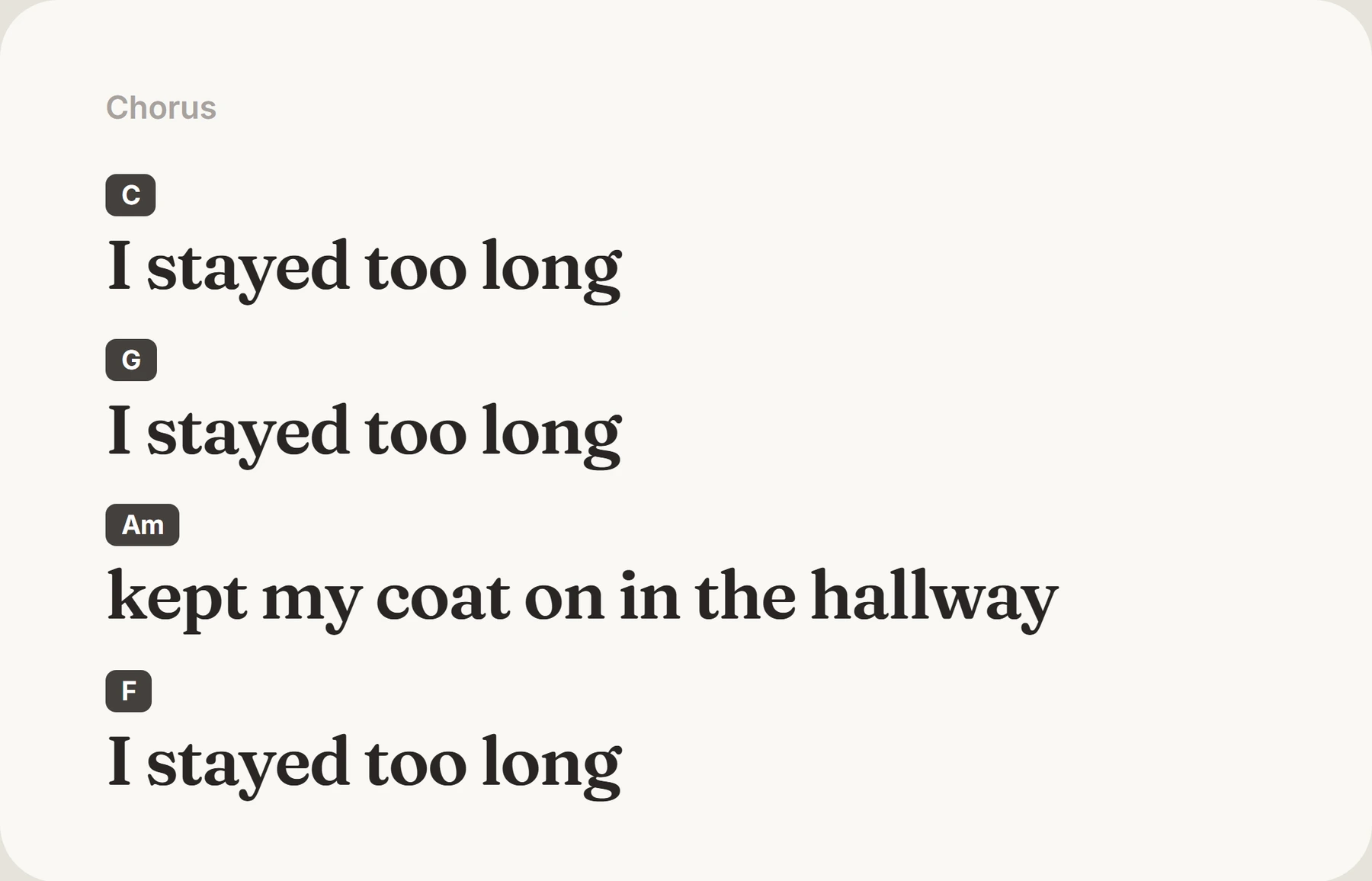
Veinote: the example chorus, with its chords placed over the words.
Four lines. Three of them are the title. The third is the one picture: a coat kept on in the hallway, which says “I was already leaving” without saying it.
Key takeaway: if a line could be cut and the chorus still made sense, cut it.
Step 4: Lift the melody
The chorus should feel like it rises out of the verse. Three simple ways to get that lift:
- Go higher. Start the chorus on a higher note than the verse sat on.
- Hold longer. Let the important word last. In the example, hold “long”.
- Leave space. Fewer words per line gives each one more room.
You do not need theory for this. Sing the verse, then sing the chorus line a few notes higher and stretch the last word. Record both on your phone and listen for the difference.
A change of chords helps too. If the verse starts on one chord, try starting the chorus on another. Our guide to chord progressions for songwriting shows which ones lift.
Key takeaway: higher, longer, emptier. Contrast with the verse is what the ear hears as a chorus.
Step 5: Repeat on purpose
Repetition is not laziness in a chorus. It is the point. A line heard once is information. The same line heard three times is a hook.
Ways to repeat without boring anyone:
- Repeat the title line, as the example does.
- Change one line, keep the rest. The different line gets all the attention.
- Change the last chorus slightly. One new word in the final chorus can turn the meaning.
Key takeaway: repeat the line you want remembered, and vary only what you want noticed.
Step 6: Write three versions, then sing them
Your first chorus is rarely your best. Write three, quickly, without judging:
- one that starts with the title,
- one that ends with it,
- one that says it in the plainest words you can find.
Then sing all three into a recorder and listen back the next day. The one you find yourself humming is the chorus.
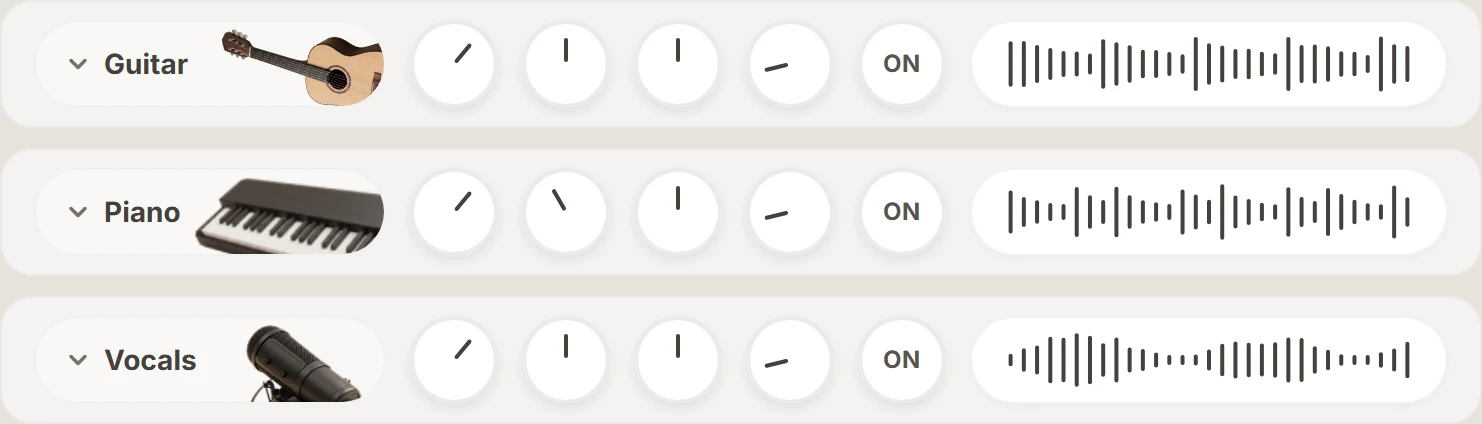
Veinote: record each version over the same chords and compare them side by side.
Our guide to recording a song demo without a studio covers the recording part.
Key takeaway: choose with your ears, a day later, not with your eyes on the page.
Common mistakes
- Too many words. If you run out of breath, so will the listener.
- A chorus that explains. Explanations belong in the verses.
- No title. People cannot ask for a song they cannot name.
- The same melody as the verse. Without contrast there is no arrival.
- Waiting for the perfect line. Use a placeholder and finish the song. See how to finish a song.
FAQ
How long should a chorus be?
Usually two to four lines, or about four to eight bars of music. Short enough to remember after one listen. If it takes longer than about twenty seconds to sing, look for lines to cut.
Should the chorus have the song title?
In most songs, yes. Put it in the first line, the last line, or both. That makes the song easy to remember and easy to find again.
Do you write the chorus or the verse first?
Either works, but writing the chorus first gives you a target: every verse line can then lead toward it. If you start with a verse, stop when you find the line that sums it up, and build the chorus from that.
How do you make a chorus catchy?
Use few words, repeat the main line, and make the melody rise above the verse. A simple rhythm that is easy to clap also helps. Then test it: sing it to someone once and see whether they can sing it back.
What is the difference between a chorus and a hook?
A hook is any short part of a song that sticks: a line, a melody, a riff. A chorus is a section of the song. The strongest hook is usually in the chorus, often on the title line.
What is a pre-chorus?
A short section between the verse and the chorus that builds tension, so the chorus feels like a release. It is optional. Add one if the jump from verse to chorus feels too sudden.
Conclusion
Say the song in one sentence, find the few words that carry it, put the title where it cannot be missed, lift the melody, repeat on purpose, and choose between three versions by ear. That is a chorus.
Veinote keeps the words, the chords and the recordings of one song together on a songwriting canvas, so you can write the chorus, place its chords and sing all three versions in one place. Veinote does not write songs for you. There is a free 3-day trial. You add a card to start it, nothing is charged during the trial, and you can cancel before it ends.